World Cup: FIFA defends VAR calls in Egypt-Argentina clash
FIFA has issued a defense of the VAR decisions made during the World Cup match between Egypt and Argentina, emphasizing the technology's role in ensuring fair play.
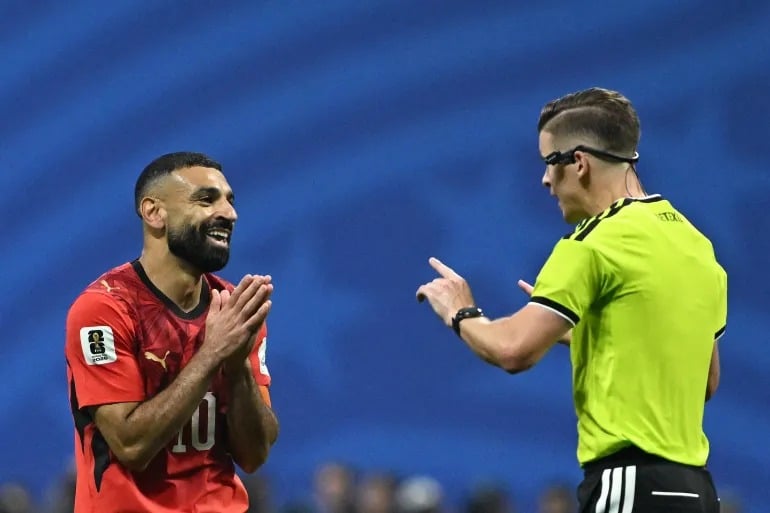
FIFA has come forward to defend the controversial refereeing decisions that played a significant role in Egypt's narrow 3-2 loss to Argentina during the World Cup round of 16. Pierluigi Collina, FIFA's head of referees, provided clarity on the reasons behind the disallowed goal for Egypt and the denial of a penalty for Mohamed Salah.
Clarification on Egypt's Disallowed Goal
The match has generated considerable debate, particularly regarding Egypt's disallowed goal, which was ruled out due to a foul in the buildup. Collina noted that FIFA typically refrains from commenting on specific refereeing decisions during tournaments but felt compelled to address the situation due to the extensive discussions it sparked. He stated, “We don’t usually prefer to comment on specific refereeing decisions during tournaments, but we recently explained how referees deal with players’ attempts to obstruct goalkeepers, and therefore we saw the need to clarify another point that has generated a lot of discussion.”
Collina elaborated on the VAR process, explaining that every goal is subject to a thorough review by the Video Assistant Referee, who examines the entire attacking sequence leading to the goal. He emphasized, “After any goal is scored, the video referee reviews the entire offensive possession phase. If a violation is detected during the build-up of the attack and it had a direct impact on the goal, the video referee recommends that the referee review the footage on the screen.” Notably, he mentioned that FIFA's VAR protocol does not impose any time or distance limitations regarding how far back officials can review an attacking move.
Reasons Behind Salah's Penalty Denial
In addition to the disallowed goal, Collina addressed the incident involving Salah, who was denied a penalty after going down following contact with Julian Alvarez. He explained that the referee, Francois Letexier, along with the VAR team, determined that no violation occurred in that instance. Collina's insights into these critical moments have added to the ongoing conversation surrounding officiating standards in high-stakes matches.
As the discussions continue, FIFA's clarifications aim to shed light on the complexities of refereeing decisions, particularly in a tournament as prestigious as the World Cup.
Source: africasoccer.com