How Spain won the World Cup without a marquee goal scorer or elite defense - ESPN
Spain's World Cup victory was marked by a collective effort rather than reliance on individual stars, showcasing the power of teamwork and tactical brilliance.
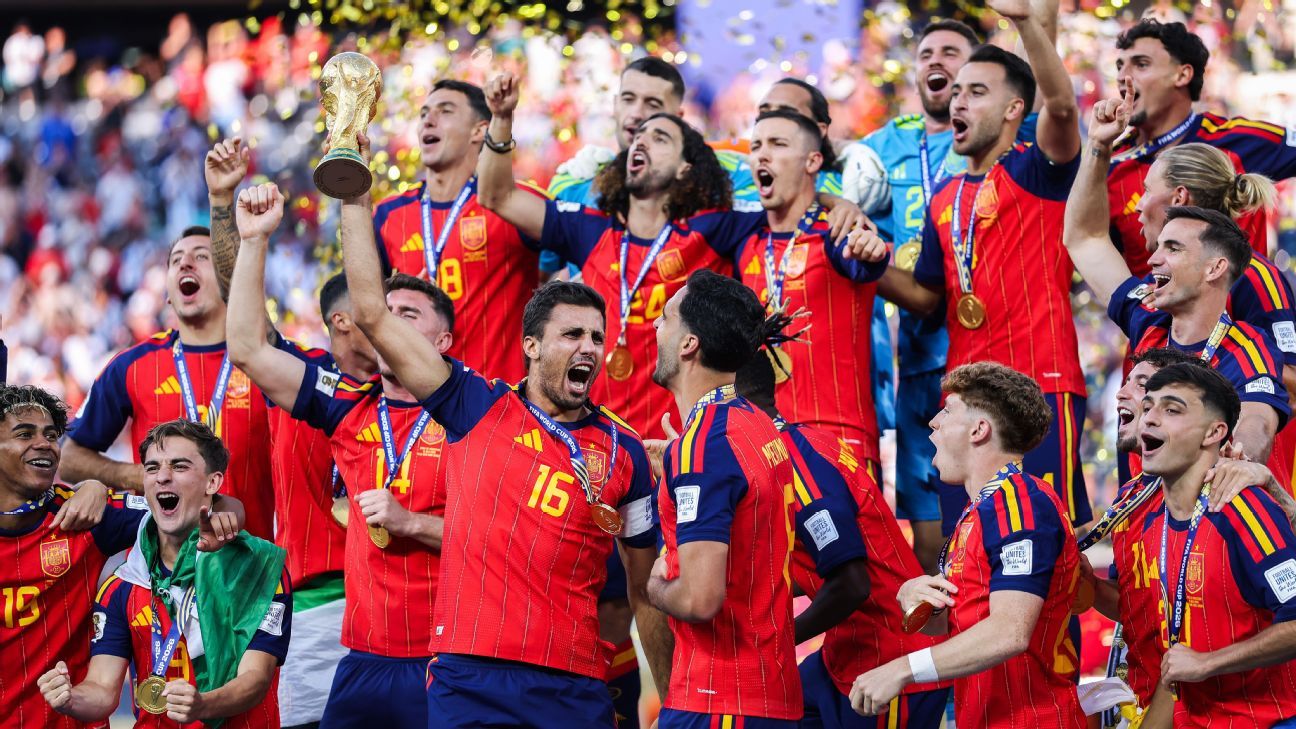
Since Spain triumphed in the World Cup final held in East Rutherford, New Jersey, discussions have emerged regarding their unexpected success. On one hand, Spain was not the most talented team in the tournament; on the other, they may very well be the finest international soccer team in history.
Spain's Historic Achievement
This assertion is supported by Elo ratings, which have tracked international matches since their inception. Spain holds the highest rating in the system's history, a feat largely attributed to their remarkable unbeaten streak that has persisted since March 2024, marking the longest such streak in men's international soccer.
Spain's defensive prowess was on full display during the tournament. They faced France, the favorites with a lineup featuring some of the world's top attackers, yet Spain managed to neutralize them, allowing only 10 shots and no quality chances. In the final, they similarly stifled Argentina and Lionel Messi, the reigning champions, effectively controlling the match.
Unlikely Heroes
Despite their success, Spain's roster raises questions about their dominance. Their starting fullbacks, Pedro Porro and Marc Cucurella, had average seasons in the Premier League, while senior center back Aymeric Laporte had moved to the less competitive Saudi Pro League. Pau Cubarsí, the tournament's standout young player, has shown promise but is still early in his career with Barcelona.
In attack, Spain's players also lacked the star power seen in other teams. Álex Baena primarily came off the bench for an Atletico Madrid side that finished fourth in La Liga, and Mikel Oyarzabal has not reached double-digit non-penalty goals in a La Liga season for eight years. Although Lamine Yamal is a rising star, he concluded the World Cup with only one goal and no assists. In contrast, other teams like England and France had multiple players competing for the Golden Boot, while Spain had none.
Understanding Spain's Success
Given this context, one might wonder how Spain managed to outperform teams filled with superstars. The answer may lie in a pattern observed in modern World Cup play, which can be termed the "Rodri Theory," named after this year's Golden Ball winner. This theory suggests that the team with the strongest midfield is often the one that secures the World Cup title.
In conclusion, Spain's World Cup victory challenges traditional notions of talent and success in international soccer. Their ability to excel without marquee players in both defense and attack highlights a shift in the dynamics of the game, emphasizing the importance of a cohesive midfield and strategic play over individual brilliance.
Source: espn.com