AIFF, ISL teams bury the hatchet, ink four-year deal towards club-led model | Football News
The AIFF and ISL teams have resolved their differences and signed a four-year deal aimed at establishing a club-led model, enhancing the structure of Indian football.
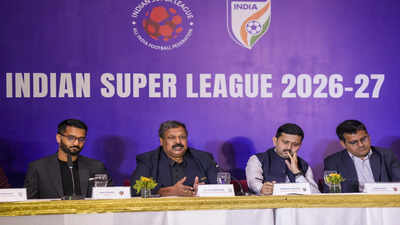
In a significant development for Indian football, the All India Football Federation (AIFF) and Indian Super League (ISL) clubs have reached an agreement on a four-year club-led model. This announcement was made during a press conference in New Delhi, where AIFF Deputy Secretary General M. Satyanarayan, along with representatives from various clubs, outlined the roadmap for the 2026-27 ISL season.
Details of the Agreement
The new model will involve the creation of a special purpose vehicle (SPV) to manage the commercial aspects of the ISL. If all 14 clubs participate, the AIFF is set to receive Rs 15.4 crore, equating to Rs 1.1 crore per club, as administration fees, in addition to a 10 percent share of net profits. Key issues that previously hindered negotiations, such as independent auditing of the SPV, the profit-sharing agreement, and a termination clause, have now been resolved.
Financial Contributions and Future Options
As part of the agreement, ISL clubs will contribute increasing amounts over the four years, starting with Rs 1.1 crore in the first year and rising to Rs 1.25 crore by the fourth year. Clubs will have the option to suspend their participation after two years, provided they notify the AIFF in advance. Satyanarayan emphasized that the league is designed to be a commercially club-led model, and a letter will be sent to all teams regarding their participation fees, which will influence the league's future direction.
Transition to Club-Led Model
The AIFF's acceptance of the club-led model marks a shift from its previous stance. Initially, the federation was hesitant about the proposal made on May 14. However, following discussions with Sports Minister Mansukh Mandaviya on June 8, the AIFF has taken a more proactive approach to managing the league. Satyanarayan clarified that the AIFF has never opposed a club-led model, noting the changes in governance following a Supreme Court ruling that mandated the federation to own and operate the league.
This new agreement represents a pivotal moment for the ISL and Indian football, as it aims to enhance the commercial viability and operational efficiency of the league while ensuring greater involvement from the clubs.
Source: newsgolive.com